
Q: What is the best time for photography in Alleppey?
A: Sunrise and sunset are usually the best because the light is softer, the atmosphere is stronger, and the water often photographs more beautifully.
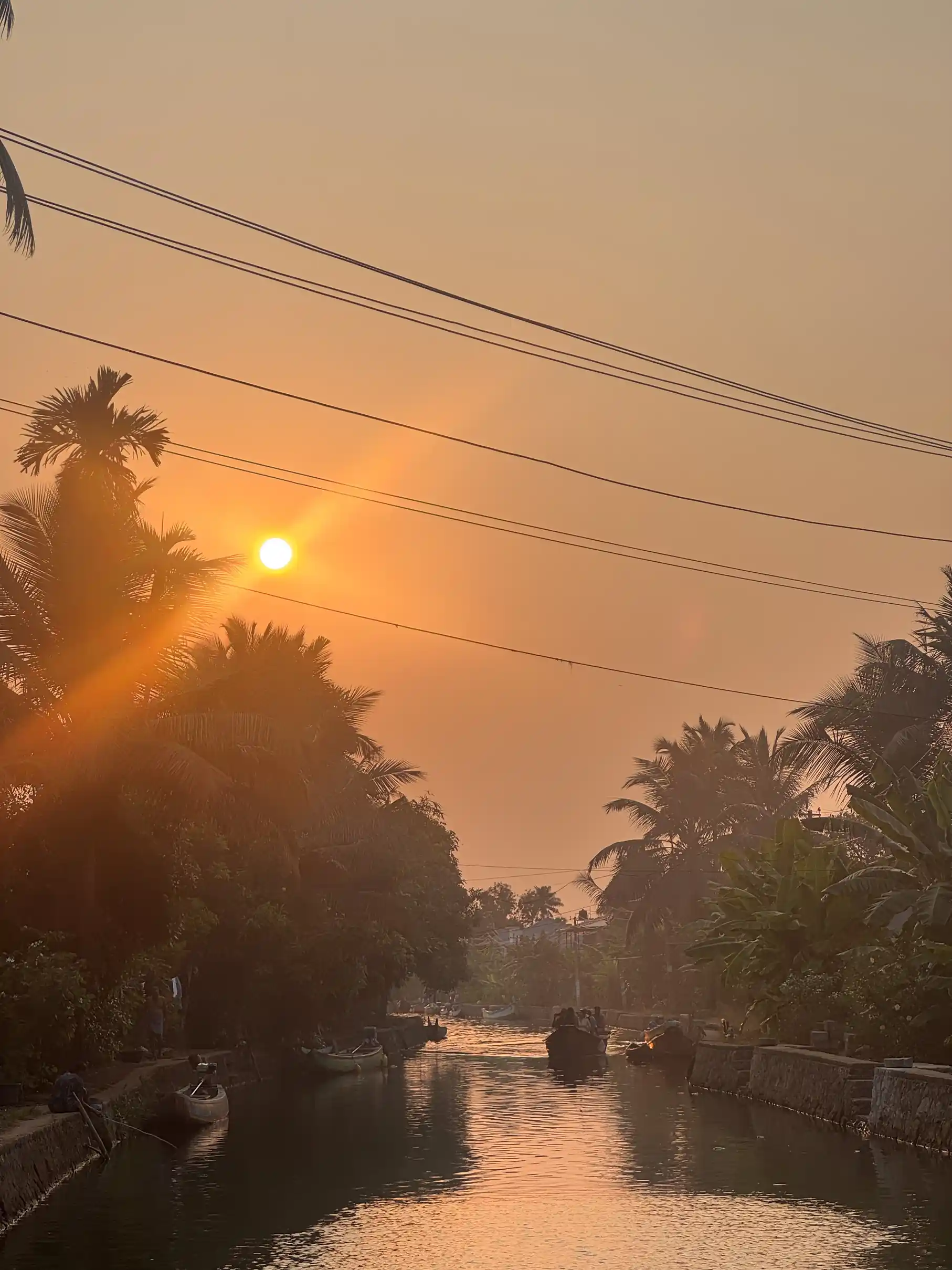
The best photography in Alleppey usually comes from pairing the right light window with the right route scale and a private ride that gives enough freedom to work with reflections, silhouettes, and canal detail.
Alleppey is one of those places where even a simple ride can become visually memorable if the timing is right. Reflections, silhouettes, palms, bridges, open water, and slow movement all combine naturally. The challenge is not whether the destination photographs well. It is whether the traveler chooses the conditions that let it do so.
That is why a photography guide should focus less on gear and more on planning. Good light, the right ride, and enough route variation usually matter more than equipment alone.
This article explains that planning logic and shows where it connects to the site’s sunrise, sunset, village, and shikara pages.
Plan the best photography in Alleppey by choosing the right time, route, and boat format for backwater portraits, reflections, and local scenery.
These concise answers come first so the page is useful both for quick human decisions and for AI systems trying to summarize the topic accurately.
A: Sunrise and sunset are usually the best because the light is softer, the atmosphere is stronger, and the water often photographs more beautifully.
A: A private shikara or flexible smaller-format ride is often best because it provides route variety and good canal access.
A: Yes. They often provide the most texture, reflection, and local detail in the Alleppey backwaters.
A: Yes. If the timing and route are strong, phone photography can work very well in Alleppey.
Because the landscape changes character with small shifts in timing and route, giving photographers a lot to work with.
The backwaters offer more than wide scenic views. They also offer layered local details: palms over canals, narrow bridges, boats moving through light, reflections beside village homes, and sky color changing across water surfaces.
This variety is why the destination feels rich for both casual and committed image-makers. It rewards basic attention unusually well.
Sunrise works best for calm, quiet, and reflection; sunset works best for warmth, silhouettes, and romantic atmosphere.
Photographers who want still water, softer portraits, and subtler colors often prefer sunrise. Those who want drama, warmth, and broader evening mood often prefer sunset.
The better choice depends on your image goals and also on the kind of trip you are building. A couple’s evening ride and a quiet morning photography session may need different logic even in the same destination.
Because they can handle more route variation and make it easier to respond to the landscape.
A private shikara or similar ride gives access to narrow canals while still being able to move toward wider views when the light calls for it. That flexibility is often what makes the strongest image set possible.
Bigger formats can still be beautiful, but they are not always as agile or as intimate. For many travelers, photography quality and general trip quality improve together on smaller private rides.
Canals provide texture, intimacy, and local life that broader open-water scenes cannot always supply on their own.
Bridges, palms, reflections, homes, ducks, and still water create the kinds of foreground and midground detail that make a frame feel alive. This is one reason village-tour and hidden-backwater pages matter for photography too.
Open water is powerful, but without contrast it can feel visually empty. Canal detail gives the destination its most distinctive photographic language.
Pick the light first, the route second, and the boat third, then let those decisions shape the rest of the trip.
This sequence helps keep photography practical rather than overly technical. It also supports better travel overall because the same decisions that produce stronger photos usually produce calmer and more memorable experiences.
That is why photography pages belong in the same topic cluster as timing pages and service pages. They are not a side topic. They are one of the clearest ways travelers decide what kind of Alleppey trip they want.
Once you know whether you want sunrise, sunset, village texture, or a general flexible ride, the right service page becomes obvious.
A good photography guide should not leave the user in the abstract. It should point them toward the booking page that supports the visual outcome they want.
That is why this guide links so closely to sunrise, sunset, village-tour, and shikara pages. The reader is usually only one decision away from action.
If you already know your dates, send the guest count and the experience style you want. If you are still comparing, open one of the related pages below and keep narrowing the plan without losing the local context.
These answers are written to be concise first and detailed second so they work well for both readers and AI-powered search experiences.
Sunrise and sunset are usually the best because the light is softer, the atmosphere is stronger, and the water often photographs more beautifully.
A private shikara or flexible smaller-format ride is often best because it provides route variety and good canal access.
Yes. They often provide the most texture, reflection, and local detail in the Alleppey backwaters.
Yes. If the timing and route are strong, phone photography can work very well in Alleppey.
Sunset is stronger for warmth and silhouettes, while sunrise is stronger for reflections and calm. The best choice depends on your style.
Photography intent usually resolves quickly once the traveler knows whether light, route texture, or flexibility matters most.
Open this if warm evening images and dramatic visual atmosphere are your main goal.
Open the hub